Koken in een zakje?!
In veel restaurants vinden we een mooi rosé gebakken stukje vlees al decennia lang op de kaart. We eten het graag buiten de deur. Maar wat als we een biefstukje thuis willen bereiden? Zeker als er gasten komen, dan slaat bij menig thuiskok de onzekerheid toe. Twee biefstukjes in de pan bakken gaat immers anders dan zes. En wat als de slager de biefstukjes net even iets dunner, of onregelmatiger heeft uitgesneden?
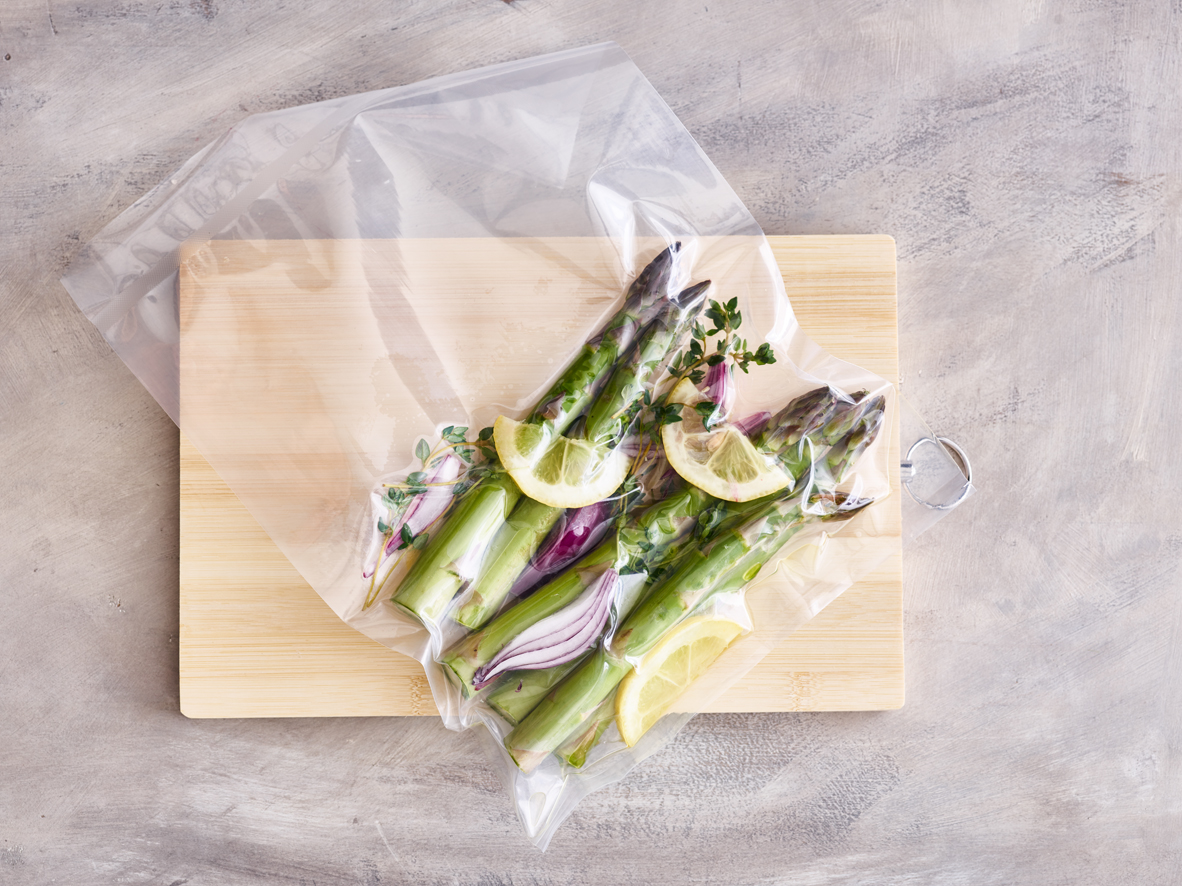
Niet voor niets bedient de horeca zich graag van de sous-vide techniek. Met sous-vide wordt een product heel beheerst tot een gewenste gaarte gebracht. Niet alleen vlees, vis, maar ook groenten kunnen sous-vide worden bereid.
Het product wordt in een plastic zakje verpakt en onder een lage temperatuur gegaard. Hoe dat in z’n werk gaat, leggen we graag aan u uit.
Vacuüm verpakt
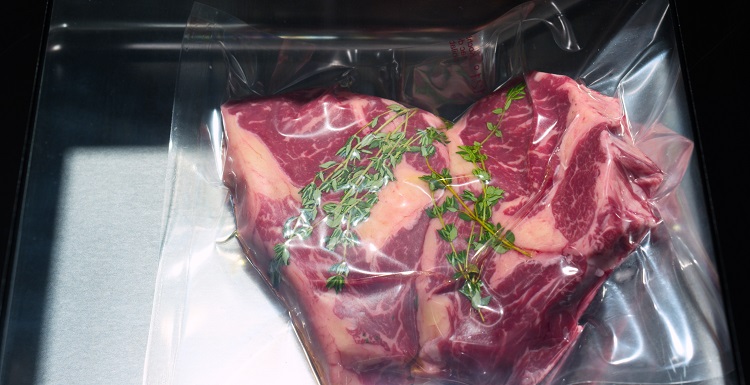
Bij sous-vide wordt het te bereiden product in een speciaal sous-vide zakje vacuüm verpakt. Hierbij gaat het niet zo zeer om het vacuüm klimaat welke van invloed zou zijn op de garing. Het gaat erom dat het plastic het product goed omsluit. Wordt het product nu omhuld door warm water of stoom, dan vindt de energieoverdracht direct plaats op het oppervlak van het product. Vacumeren doet u eenvoudig met een vacumeermachine.
U kunt ook in het zakje wat smaakmakers als olijfolie, gesmolten boter, verse kruiden, specerijen of citroenzestes toevoegen. Doordat het product vacuüm wordt omsloten, trekken smaakmakers goed in en lekken aroma’s en producteigen sappen niet weg.
Sous-vide bereiden
De uitdaging bij het bereiden van vlees en vis is het behouden van een mooie textuur. Het gaat om de balans tussen het vocht en de eiwitten die het vocht insluiten. In het geval van vlees speelt het bindweefsel ook een rol. Boven de 60 graden krimpt bindweefsel en perst het vocht uit het malse vlees. Tussen 55 en 60 graden is een biefstukje dan ook uitstekend rosé, mals en sappig.
Een vacuüm verpakte biefstuk stoomt u in een stoomoven op hooguit 60 graden. Trek daar wel zeker anderhalf uur voor uit. De biefstuk wordt heel langzaam à point gebracht. Maar niet alleen dat. Door de lange bereidingstijd zal het bindweefsel heel geleidelijk mooi zacht worden.
Heeft uw biefstuk nu een bruin korstje? Nee, maar dat is heel eenvoudig opgelost. Na het sous-vide garen, kan het biefstukje even zo goed rondom worden aangebraden. Dep het vlees wel even iets droog. Doe dit vlak voor het serveren en houdt het kort. De beste kans op een perfecte biefstuk!