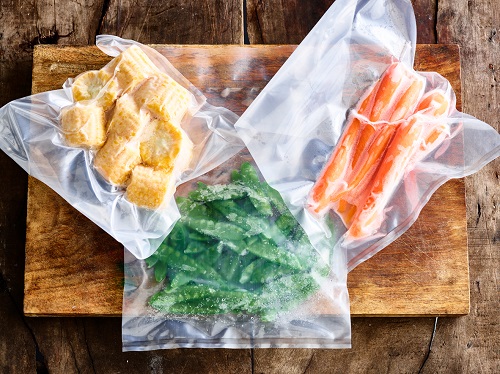
We scheiden ons afval, letten op energielabels en proberen bewuste keuzes te maken ten aanzien van het milieu. Verantwoord omgaan met eten hoort daar ook bij. We gooien gemiddeld zo’n 14 procent van ons goede voedsel ongebruikt weg. Soms te veel gekookt, vaak ook teveel ingekocht of verkeerd bewaard. Dit laatste kan anders!
Tegenwoordig kunt u zelf thuis producten vacumeren. Veel schimmels en bacteriën kunnen het best groeien onder invloed van zuurstof. Ook beïnvloedt zuurstof de smaak en structuur van voedsel. Door het weghalen van zuurstof en luchtdicht verpakken worden veranderingen van kwaliteit en groei van bacteriën en schimmels in het product vertraagd. Ook uitdrogen kan niet meer. Er zijn wel een aantal stelregels waaraan u moet denken bij vacumeren:
- Producten die koel moeten worden bewaard, moeten ook na het vacumeren de koelkast in. Zo blijven de producten tot wel 5 x langer vers en houdbaar.
- Alles wat u niet koel hoeft te bewaren, kunt u ook na het vacumeren het beste buiten de koeling houden. Denk eens aan een aangebroken pak koffie, thee of nootjes. Kiest u voor een gematigde vacumeerstand, dan kunt u ook kwetsbare producten als koekjes, chips en brood vacuüm verpakken.
- Zelfs teer fruit zoals besjes kunnen gevacumeerd worden met deze stand. Het fruit moet wel in de koeling bewaard worden.
- Producten in de diepvries zijn langer houdbaar, mits ze goed worden verpakt. Ook in bevroren toestand kunnen producten uitdrogen. Dit wordt vriesbrand genoemd. IJskristallen verdampen aan het oppervlak en de structuur en smaak wordt aangetast. Vacuüm verpakken van producten voorkomt dit!
Ontdooi vacuüm verpakte producten in de koelkast. Ook al zijn ze luchtdicht verpakt, steriel is het niet. Door in de koelkast te ontdooien krijgen aanwezige bacteriën weinig kans om verder te groeien.
Maar er zijn nog veel meer aangename bijkomstigheden aan vacumeren.
- Door vlees en vis met kruiden of marinade vacuüm te verpakken, kunnen vlees en vissappen niet weglekken. De smaakmakers zullen een nog intensere smaak afgeven aan uw eten.
- Door te vacumeren kunt u eten sous-vide bereiden. U omhult een vacuüm verpakt product met stoom of warm water, heel gematigd, net zo lang tot het product tot in de kern de gewenste gaarte heeft bereikt. Dit gaat langzaam en heel beheerst. Een product kan niet overgaar raken. Niet alleen vlees, vis, maar ook groenten kunnen sous-vide worden bereid.
- Delicate sauzen maakt men meestal niet in kleine hoeveelheden. Wat overblijft kan handig in porties worden gevacumeerd en eventueel worden ingevroren. In een stoomoven zijn ze dan zo weer opgewarmd en klaar voor gebruik.
- Ook kant en klaar eten of restjes kunnen in éénpersoons porties worden verdeeld, gevacumeerd en ingevroren. Lukt het niet met alle gezinsleden op een vast tijdstip te eten? Geen punt! Doe alle porties in een stoomoven. Die warmt het op, houdt het voor u warm en een ieder eet wanneer het uitkomt.